Pages

Monday, 6 February 2012

The ultra lite Syria draft vetoed by Russia, China


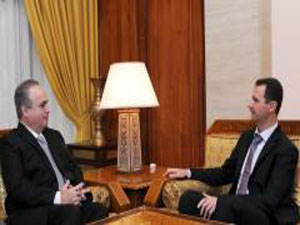
(Photo from enduringamerica.com)

Here, for the record, is the full text of the watered down UN Security Council draft resolution on Syria that Russia (oppressor of Chechnya and invader of Georgia) and China (persecutor of Uyghurs and Tibetans) vetoed on Saturday:
The Security Council,
Recalling its presidential statement of 3 August 2011,
Recalling General Assembly resolution A/RES/66/176 of 19 December 2011, as well as Human Rights Council resolutions S/16-1, S/17-1 and S/18-1,
Noting the League of Arab States' request in its decision of 22 January 2012,
Expressing grave concern at the deterioration of the situation in Syria, and profound concern at the death of thousands of people and calling for an immediate end to all violence,
Welcoming the League of Arab States' Action Plan of 2 November 2011 and its subsequent decisions, including its decision of 22 January 2012, which aims to achieve a peaceful resolution of the crisis,
Noting the deployment of the League of Arab States' observer mission, commending its efforts, regretting that, due to the escalation in violence, the observer mission was not in a position to monitor the full implementation of the League of Arab States' Action Plan of 2 November 2011, and noting the subsequent decision of the League of Arab states to suspend the mission,
Underscoring the importance of ensuring the voluntary return of refugees and internally displaced persons to their homes in safety and with dignity,
Mindful that stability in Syria is key to peace and stability in the region,
Noting the announced commitments by the Syrian authorities to reform, and regretting the lack of progress in implementation,
Reaffirming its strong commitment to the sovereignty, independence, unity and territorial integrity of Syria, emphasizing its intention to resolve the current political crisis in Syria peacefully, and noting that nothing in this resolution authorizes measures under Article 42 of the Charter,
Welcoming the engagement of the Secretary-General and all diplomatic efforts aimed at addressing the situation, and noting in this regard the offer of the Russian Federation to host a meeting in Moscow, in consultation with the League of Arab States,
1. Condemns the continued widespread and gross violations of human rights and fundamental freedoms by the Syrian authorities, such as the use of force against civilians, arbitrary executions, killing and persecution of protestors and members of the media, arbitrary detention, enforced disappearances, interference with access to medical treatment, torture, sexual violence, and ill-treatment, including against children;
2. Demands that the Syrian government immediately put an end to all human rights violations and attacks against those exercising their rights to freedom of expression, peaceful assembly and association, protect its population, fully comply with its obligations under applicable international law and fully implement the Human Rights Council resolutions S-16/1, S-17/1, S-18/1 and the General Assembly resolution A/RES/66/176;
3. Condemns all violence, irrespective of where it comes from, and in this regard demands that all parties in Syria, including armed groups, immediately stop all violence or reprisals, including attacks against State institutions, in accordance with the League of Arab States' initiative;
4. Recalls that all those responsible for human rights violations, including acts of violence, must be held accountable;
5. Demands that the Syrian government, in accordance with the Plan of Action of the League of Arab States of 2 November 2011 and its decision of 22 January 2012, without delay:
  • (a) cease all violence and protect its population;
  • (b) release all persons detained arbitrarily due to the recent incidents;
  • (c) withdraw all Syrian military and armed forces from cities and towns, and return them to their original home barracks;
  • (d) guarantee the freedom of peaceful demonstrations;
  • (e) allow full and unhindered access and movement for all relevant League of Arab States' institutions and Arab and international media in all parts of Syria to determine the truth about the situation on the ground and monitor the incidents taking place; and
  • (f) allow full and unhindered access to the League of Arab States' observer mission;

6. Calls for an inclusive Syrian-led political process conducted in an environment free from violence, fear, intimidation and extremism, and aimed at effectively addressing the legitimate aspirations and concerns of Syria's people, without prejudging the outcome;
7. Fully supports in this regard the League of Arab States' 22 January 2012 decision to facilitate a Syrian-led political transition to a democratic, plural political system, in which citizens are equal regardless of their affiliations or ethnicities or beliefs, including through commencing a serious political dialogue between the Syrian government and the whole spectrum of the Syrian opposition under the League of Arab States' auspices, in accordance with the timetable set out by the League of Arab States;
8. Encourages the League of Arab States to continue its efforts in co-operation with all Syrian stakeholders;
9. Calls upon the Syrian authorities, in the event of a resumption of the observer mission, to co-operate fully with the League of Arab States' observer mission, in accordance with the League of Arabs States' Protocol of 19 December 2011, including through granting full and unhindered access and freedom of movement to the observers, facilitating the entry of technical equipment necessary for the mission, guaranteeing the mission's right to interview, freely or in private, any individual and guaranteeing also not to punish, harass, or retaliate against, any person who has co-operated with the mission;
10. Stresses the need for all to provide all necessary assistance to the mission in accordance with the League of Arab States' Protocol of 19 December 2011 and its decision of 22 January 2012;
11. Demands that the Syrian authorities co-operate fully with the Office of the High Commissioner for Human Rights and with the Commission of Inquiry dispatched by the Human Rights Council, including by granting it full and unimpeded access to the country;
12. Calls upon the Syrian authorities to allow safe and unhindered access for humanitarian assistance in order to ensure the delivery of humanitarian aid to persons in need of assistance;
13. Welcomes the Secretary-General's efforts to provide support to the League of Arab States, including its observer mission, in promoting a peaceful solution to the Syrian crisis;
14. Requests the Secretary General to report on the implementation of this resolution, in consultation with the League of Arab States, within 21 days after its adoption and to report every 30 days thereafter;
15. Decides to review implementation of this resolution within 21 days and, in the event of non-compliance, to consider further measures;
16. Decides to remain actively seized of the matter.

Sunday, 5 February 2012

Morning-after UN vote: Arabs dip, Syria dances

Double-veto by China and Russia (AP newswire photo from Asharq Alawsat)

The morning after Russia and China vetoed a UN Security Council "Resolution Lite" backing the Arab League peace initiative for Syria, Arab public opinion shapers urge the League to stop pussyfooting while Syrian media is hula-hoop dancing.

SYRIA

You can read the mood in state-run Syrian media from headlines trumpeted this morning:
  • Syrians gather in front of Russian and Chinese embassies in Damascus in appreciation of their stances at Security Council
  • Syrians in Saudi Arabia thank Russia and China for veto
  • Sabotage groups attack Syria's embassies in Cairo, Kuwait, Amman, Athens, London and Tripoli

On the opinion pages of the Damascus daily al-Watan, commentator Hassan Hardan shouts from the rooftops: “Spectacular fall of the Arab League and Western hegemony at the Security Council.”

Hardan says failure of the Western-Arab “colonialist” attempt to use the Security Council as a “springboard to cow Syria” and salvage the so-called New Middle East has four significant upshots:
  1. It undercuts the clout of Western nations – “chiefly the U.S., France and United Kingdom” – at the world body.
  2. It uplifts the BRICs alliance grouping Brazil, Russia, India, China and South Africa.
  3. It humiliates the Arab League, which has become a Western tool to undermine the pan-Arab nation.
  4. It gives strength to Syria’s fight against conspirators and schemers.

ARAB

Abdul Rahman al-Rashed, head of the influential Alarabiya News Channel, writes for Saudi Asharq Alawsat about “Those who went hunting for Assad in New York.”

In his opinion:

Thinking the Security Council in its present state can legitimize the overthrow of Syria’s regime is an illusion. The idea that a League decision endorsed by the Security Council after “a play on words” carried with it the entrance key to Damascus is a fantasy as well.

Exceptionally, the solution is not in New York. It is in two venues only: Cairo and Syria. The League can boot out the Syrian regime and give the opposition the right to represent its country. This is what was done in the case of Saddam’s regime after Iraq’s occupation of Kuwait. And this is how the League reacted to the crimes committed by Gaddafi in Libya.

The Arab League also erred when it went along with a heavily watered down draft resolution in New York, which if adopted would have given the regime a lifejacket instead of trussing a noose around its neck.

Saturday, 4 February 2012

Egypt: “Ali Baba and the Forty Thieves”

Albert Robida illustration of the Forty Thieves (from Wikipedia)

“We were able to bring down Ali Baba. We now have to go after the Forty Thieves.”

Gamal Heshmat, undersecretary of the foreign affairs committee in Egypt’s newly elected parliament, was reacting in Cairo to the disaster that left 79 people dead and hundreds more maimed after a football match between top-tier clubs al-Masry and al-Ahly in Port Said last Wednesday.

He was borrowing from the folk tale in medieval Arabic literature of “Ali Baba and the Forty Thieves” to evoke the overthrow of former president Hosni Mubarak a year ago before pointing the finger of blame for the football catastrophe at Egypt’s ruling generals in the Supreme Council of the Armed Forces (SCAF).

As the print and electronic media continue to show images and video clips of those fatally stabbed, bludgeoned or crushed to death and injured in the Port Said violence, the focus now is on holding SCAF and the Central Security Forces (CSF) to account.

The worst disaster in Egypt’s football history on February 1 has not stopped reverberating in Suez and Cairo street battles, leaving four people dead and more than a thousand injured by this writing today.

In an extraordinary session of Parliament on Thursday, several legislators -- including Amr Hamzawy, Mostafa El-Naggar, Mohamed Abu Hamed and Abu Ezz El-Hariri – accused SCAF of being responsible for the violence, demanding that it hand over power to a civilian authority as soon as possible.

Some MPs echoed the sentiments of protesters by demanding the end of military rule, either by holding presidential elections earlier than the scheduled date of June 2012, or by the appointment of a national salvation government to assume power until a civilian president is elected.

"There is a political crisis because SCAF has lost its legitimacy, which it originally gained on February 11 by the power of the people," said liberal MP Hamzawy during the session. "The main reason why SCAF assumed power was to end the bloodshed [during the revolution] and that hasn't happened yet."

The Moslem Brotherhood’s Freedom and Justice Party, which dominates parliament, detected "invisible planning" behind "this unjustified massacre" in an online statement. But its most prominent representative, Essam al-Erian, said the ruling military and police were complicit. Their aim, he believed, was to show the need to maintain restrictive emergency laws.

Most of the dead at Port Said stadium were al-Ahly supporters. Hardcore fans - known as "Ultras" - have accused SCAF and SCF of allowing the killings to happen.

They say the authorities wanted revenge because the Ultras were among those battling army and police forces during last year's revolution that toppled Mubarak.

Ahram Online has a very informative news feature (and a series of 10 videos) on Egyptian football’s Ultras that are now strongly involved in the country’s heated domestic affairs.


Capitalizing on their physical and organizational capabilities, the flamboyant youth Ultras have featured prominently in recurring confrontations with security forces, and also took part in protests — though not all — throughout the year 2011.

But much as their out-of-stadium appearances gave momentum to events that politically impacted Egypt over the past few months, the motives of the Ultras as a group can barely be deemed political…

During the 18-day revolt last year, Ultras members decided to hit the streets as individuals. However, they became noticed as a group.

Particularly, Ultras Ahlawy and Zamalek’s White Knights soldiered on in Tahrir Square in the face of brutal attacks from the notorious CSF and hired thugs who assaulted and killed protesters in the infamous Battle of the Camel.

Much to their pride and in most battles, members of the fanatic fan bases vanquished the deposed regime’s police personnel and thugs, who eventually failed to nip the uprising in the bud...

At the time, bringing about political upheaval was not really what enthused the Ultras. Rather, the impulse was to lock horns with their archenemies, the police, to avenge abuses they had previously suffered under Mubarak’s security apparatus.

The same urge has ever since remained their primary motive to join political rallies…

On the “Friday of Correcting the Path” on September 9, eight months after the revolution, Ultras Ahlawy and the White Knights made their most sturdy and sensational return to Tahrir Square, the focal point of the January uprising.

On that day, other protesters called for the fulfillment of many demands, such as retribution against those who killed peaceful demonstrators during the revolution and the end of military trials for civilians. The Ultras groups, on the other hand, were there for a dispute with the Interior Ministry.

Their main demand was the release of their cohorts who were arrested three days earlier following a brawl that had erupted with the CSF after the final whistle of an Ahly cup match.

That post-match scuffle reportedly took place when the CSF assaulted Ahly’s Ultras in the stands and arrested some of them, apparently because they cursed Mubarak and former Interior Minister Habib el-Adly in the dying minutes of the game.

While protesting the incident, the Ultras vociferously chanted again against the infamous pair throughout Tahrir and all the way to the nearby Ministry of Interior headquarters…

“All demonstrators always welcome the Ultras members in Tahrir Square,” Ahmed Ezzat, general coordinator of the Popular Committees for Protecting the Revolution, told Ahram Online. “They are highly organized and are not looking for any media attention,” he added. “They have the tendency to struggle in hard times; they are perceived to be comrades in the project of the revolution and have robustly supported the revolutionaries all along.”

***

The morning after the Massacre at Port Said, renowned journalist and author Dima Khatib, contributed an op-ed piece for Counterfire on the prominent role played by the “Ultras” in the Egyptian revolution and speculation of regime complicity in the crowd violence at the Port Said match.


Do you remember this (video)?

Let me refresh your memory. It was on the 2 February 2011, one year ago. Thugs on camels, horses and donkeys, which came all the way from the Pyramids, about 17 kilometers away, attacked Tahrir Square. These clashes that lasted for hours and hours, being watched live on TV all over the world, came to be known as the Camel Battle. It was an unforgettable day in Egypt's 18 days of protests that ended up with toppling Hosni Mubarak on 11 February 2011. 


The pitch invasion in Port Said (photo from albawaba.com)
Now look at this (Port Said video dated 1 February 2012).

So one year later, at a football stadium in the city of Port Said, chaos breaks after a football match and somehow violence ends up with a death toll of almost 80 people and 300 more injured! Now going back to that famous Camel Battle a year ago, anyone who was there that day in Tahrir would tell you that the Ultras showed amazing bravery in standing up to the thugs and protecting the protesters from them. Yes. I am talking about football Ultras who usually spend their time and energy cheering and chanting for football teams. In fact Egypt's Ultras have played a very important role in the Revolution, not just on 2 February. They were there from day 1 (25 January 2011) chanting, leading and protecting the protesters. I did not know about them until I went to Egypt after Mubarak's fall. It was on 19 June 2011 that I first met an Ultra. It was on 19 June 2011 that I first heard an anti-SCAF slogan too, chanted by the Ultra.

It was outside the Military Prosecution's Office. A very small group of activists were gathered while journalist and activist Rasha Azab was being questioned inside. Civilians like Rasha were being tried, in the thousands, in military courts. The Ultra was chanting: Down with the Military Rule. I was impressed with his energy and internal force, especially in the heat of midday. I was melting in the sun while he never stopped chanting for the whole time that I was there. Hardly anyone back then dared chant against the military, or even dared have bad thoughts about the military. The military was the one that "saved the day," "saved the people from Mubarak," "safeguarded the revolution," etc. The Army of Egypt was sacred in the heads of Egyptians.
 

By early July many more were chanting against the military rule and were camped in Tahrir Square. Ultras were there too. One of them got me a tent to rest in on the first night while I was doing a Night in Tahrir story for Aljazeera about the sit-in. He stood outside the tent to make sure nobody would harm or bother me. Many female protesters told me they felt safer when Ultras were around because they were brave and were "real men.”


Now back to the present. So many Ultras are dead. Surprisingly -- or maybe not surprisingly -- from al-Ahly football club. Al-Ahly Ultras have been among the most vocal and most active revolutionaries. As the news travelled around the world about those Ultras being killed and injured, many probably thought: oh this was just another hooligans’ fight!

But in Egypt conspiracy theories and accusations grew louder and louder on TV stations and social media. Let's not forget that Egyptians have had quite an eventful week since 25 January 2012 when more people than ever before turned up at Tahrir Square. That was followed by a major bank robbery, clashes between protesters and Muslim Brotherhood supporters outside parliament, continued sit-in outside State TV, etc.

In the beginning of this video you can see clearly how security forces stood by watching while violence was breaking at the stadium. Such footage coupled with countless accounts by witnesses with details of how things turned ugly only came to emphasize people's doubts that the ultras may have been targeted. Whether or not that is true, the damage is already done. As the train from Port Said arrived at Cairo Station after 3 a.m., carrying some of the Ultras, including injured ones, their family members and friends were waiting to see who would come out of the train, alive. Some did come out, safe and sound. Others came out injured. But some did not make it! It was a very emotional moment. And thousands were gathered at the station.

The chanting was becoming louder and clearer:
"Either we get their rights, or we die like them,"
 "Down with the Military Rule," "The People Want to Execute the Field Marshall."


Minister Ghazi el-Aridi
Ambulances took the injured to hospitals while the Ultras marched on to Tahrir Square, a square they know very well, a square where they have survived many battles before and are ready for any new ones to come.

***

Lebanese MP and government minister Ghazi el-Aridi wonders in a write-up on Egypt for today’s edition of the UAE daily al-Itihad whether we are now watching the fire and brimstone of the revolution there or the revolution burning down. I suspect the former, at least until a new civilian president is duly elected later this year to succeed Mubarak.

Friday, 3 February 2012

Probing the mind of the Syrian opposition

Burhan Ghalioun (from al-Hayat)

Syrian National Council head Burhan Ghalioun, who is New York lobbying for a UN Security Council resolution backing an Arab plan for power transfer in Syria, talking exclusively to Raghida Dergham about Russia’s stance, the chances of civil war, the Free Syrian Army, Syria's Moslem Brotherhood, Turkey, Iran, Iraq and Hezbollah:  

On the UN Syria resolution
The SNC and Syrian people don’t count on resolutions, whether coming from the Security Council or even the Arab League. This does not mean we shun political battles (in international forums). It only means our foremost battle is on the ground, on Syrian soil. The SNC’s sole purpose in fighting political battles is to bolster the Syrian revolution on the ground.

On Russia
We want Russia to change its position, to condemn the regime’s violence against the Syrian people and to recognize that people’s rights to freedom, dignity and democracy. The Russians are getting there. They used to dwell on foreign conspiracies and gangs etc… But for the first time in our meetings, they have started to talk of the people’s rights. They recognize that people (in Syria) are struggling for their rights and freedom. But they (Russians) insist on a solution being reached through dialogue.

We’re not against dialogue. But we can’t be here today mustering UN Security Council support for the Arab League peace blueprint and leave suddenly for Russia to negotiate with the regime. We told them (Russians) so. I told (Russia's Ambassador to the United Nations) Vitaly Churkin if Russia did not wield its veto and were to let the Security Council resolution pass, we could have (all-Syria) negotiations in Moscow on the transfer of power as stipulated in the Arab peace plan. We don’t have a problem with the venue, except that any initiative has to fulfill the transfer of power to the people. Thus, possible negotiations in Moscow would have to be about the transfer of power. There won’t be negotiations with the regime, but negotiations on transfer of power procedures.

On the U.S. and UN
We did not seek U.S. assistance in our meetings with either (U.S. Assistant Secretary of State for Near Eastern Affairs) Jeffrey Feltman or (U.S. Special Middle East Peace Envoy's assistant, Frederick) Hoff. We discussed UN Security Council options. I said there were two choices. One is to stand our ground with the Russians and accept their veto. That would give the regime another two- or three-week breathing space to continue the killings. The second option is to try and convince India, Pakistan, South Africa and perhaps Russia to back a resolution that would save Russia’s face but would not erode the essence of the resolution.

That’s what we discussed with them (Americans). We did not seek or discuss any sort of assistance. We asked the European Union to set up a fund that would extend material and humanitarian aid to the Syrian people. That’s what we asked of the Arabs and will be asking of the United States and everyone else in the world. I don’t think the Americans wish to do more than that.

In my meeting here at the UN with the Assistant Secretary-General for Political Affairs, I also requested humanitarian and relief aid to the Syrian people at this stage.

On the chances of civil war
I think sectarian tensions have increased substantially. There have been clashes here and there. And there will be more of them. But I am certain the Syrian people will steer clear of internecine strife. Proof is that the regime tried but failed to ignite one.

On Assad standing down
We unequivocally and unhesitatingly want Assad to stand down. His regime is crumbling already. The regime is crippled. There is no regime left in Syria. There is chaos being exploited by a president trying to remain in office… (Assad’s deputy) Farouk al-Sharaa won’t head a (new) regime. He will be a cover-up for the transfer of power. He will be an implement for burying the regime.

On the Moslem Brotherhood
You cannot compare Egypt’s Moslem Brothers, for instance, with Syria’s. Egypt’s Moslem Brothers remained a cohesive and strong party throughout the recent past when the Moslem Brotherhood in Syria was practically nonexistent. Syria’s Moslem Brothers are now rebuilding their ranks. But I don’t think Syria’s Moslem Brotherhood is after Islamist rule in Syria. They are calling for multiparty cooperation with other political forces in a democratic government. It’s not in their interest to play the hegemonic card either during or after the revolution. Syrian public opinion aspires for freedom and not for a new dictatorship.

On recognition of the SNC
The SNC is a council, not a state. Unlike a state, it lacks a foothold on the national soil. We are a complementary component of the Syrian revolution. We are not a substitute to the regime. The regime’s replacement will emerge from the ballot box and through new state institutions.

On the Free Syrian Army
Recourse to arms by the army defectors was quintessential because civilians are lacking protection. They (army defectors) assumed part of a role that was shunned by the international community.

My fear is not the recourse to arms. My worry is failure to gather and organize the emerging military force so it can stay under political orders. We don’t want the emerging military force to operate, after the regime’s fall, independently of an organized political structure. That’s my fear. Hence the SNC drive to build relations with the SFA. We want the SFA to submit to a chain and command political structure and become the nucleus of the anticipated Syrian national army instead of a militia.

On Turkey and Iran
Rivalry between Turkey and Iran is far from being sectarian. They are the region’s heavyweights. They are sparring for a strategic trophy, which is Syria.

The SNC does not have relations with the Iranians. They tried building bridges and initiating a dialogue with us. We said we recognized Iran as a great regional power but we would not negotiate with any side opposing our people’s aspirations. We will negotiate with the Iranians once they issue a statement upholding the right of the Syrian people to a democratic regime.

On Hezbollah
There has been a marked change in the tone of Hezbollah leader Hassan Nasrallah’s speeches. In his early speeches he always talked of U.S. or foreign conspiracies and accused me of wanting to sever relations with Hezbollah. That’s not true. I said Hezbollah wouldn’t be the same after change in Syria. Hezbollah changed the tone of its rhetoric even before the regime’s exit. It will tone it down further after the Assad regime’s exit.

On Iraq
I am aware there are Iraqi sides solidly behind the Syrian regime. Where Prime Minister Nouri al-Maliki is concerned, he sent us messages to meet so he can declare his support of the Syrian people. We said we were waiting to hear such support, in which case we would head to Baghdad, meet with the Iraqi government and pave the way for new relations between Iraq and the anticipated democratic Syria. We are also waiting for the political situation in Iraq to clear. We don’t want to get involved in it.

(Raghida Dergham’s 4,000-word interview with Burhan Ghalioun is published in Arabic today in al-Hayat)


Thursday, 2 February 2012

All-Syria talks in Moscow could break UN impasse

Wahhab with Assad in Damascus yesterday (photo from www.champress.net)

A call for all-Syria talks in Moscow sounds like the panacea likely to break the impasse in ongoing UN talks on Syria.
Ms Raghida Dergham, pan-Arab daily al-Hayat’s senior diplomatic correspondent in Washington and New York, reports this morning:
“The focal point of negotiations with Russia is a tradeoff whereby Russia agrees to back the Arab initiative enshrined in the Security Council resolution and the opposition Syrian National Council accepts Russia’s invitation for talks with the regime in Moscow.”
She says SNC leader Burhan Ghalioun told her in an exclusive interview to be released tomorrow, Friday, “If Russia is prepared to let the Security Council resolution pass by withholding its veto, there could be some rounds of negotiations in Moscow on the transfer of power as specified in the Arab initiative… We have no problem with the venue” so long as it leads to the transfer of power.
Russia’s UN envoy to Vitaly Churkin Tuesday urged the parties to the Syrian conflict to start dialogue. He said his country invited “the Syrian authorities and all opposition groups [to send their representatives to Moscow within mutually acceptable time periods to hold informal contacts without preconditions.
“It is very important to start a dialogue now, during which the necessary agreements on the country’s political future will be specified.”
A day earlier, the Russian foreign ministry said, "Our offer has already received a positive response from the Syrian authorities."
 But Ghalioun rejected the offer, telling AFP President Bashar al-Assad’s “resignation is the condition for any negotiation on the transition to a democratic government in Syria."
The foreign ministry said talks in Moscow were "acutely necessary for the immediate cessation of all violence in Syria and preventing a bloody split in society."
They would also help ensure the "success for profound democratic changes in the country, in keeping with the aspirations of all Syrians."
Russia said its offer to host talks was aimed at ending the crisis "through a peaceful mechanism worked out by the Syrians themselves, without international interference."
In Beirut, Wiam Wahhab, Lebanon’s one-time cabinet minister who heads the Druze-dominated Arab Tawhid Party, says in the wake of his three-hour one-on-one meeting with Assad in Damascus on Wednesday: “I found him (Assad) reassured and unperturbed. He trusts Russia’s stand, saying Moscow’s tackling of the Syria File is not circumstantial or ephemeral as some people imagine.” Wahhab also quoted Assad as telling him: ”The decisive phase has begun, but that won’t hamper planned reform. At the end of the day, chaos is much more costly than decisiveness.”

Wednesday, 1 February 2012

Syria itching for Lebanon to join the fray


The FSA coat of arms (from Wikipedia.org)

It looks as though the Syrian regime of President Bashar al-Assad wants to embroil its proxy Beirut government in the fight against the rebel Free Syrian Army (FSA).
Syrian and Arab media today quote Ali Abdul Karim Ali, Syria’s first ambassador to Lebanon, as saying: “The highest percentage of arms and armed people is filtering through a sisterly state -- Lebanon… The smuggling of arms, the infiltration of armed men (into Syria) and the welcoming (in Lebanese safe havens) of (FSA) mercenaries are incompatible with dissociating oneself (a reference to Lebanon's policy to dissociate itself from the 10-month uprising in Syria).”
His remarks come hot on the heels of reports that Damascus has requested the deployment of the Lebanese Army to the border with Syria.
The request, reportedly made “through military channels,” is for Lebanese Army regulars to be posted specifically in and around the border town of Arsal in the Bekaa Valley and in northern Lebanon’s Akkar and Wadi Khaled districts. All three areas are hotbeds of Syrian uprising supporters.
The answer of the Lebanese military was that such moves required a “political decision” by the government. The split in Lebanon on the crisis in Syria presumably hampers such a decision.
The governing March 8 alliance supports Assad to the hilt, while the March 14 alliance backs the Syrian opposition unreservedly.
To coincide with Ambassador Abdul Karim Ali’s remarks, a pro-Assad Beirut daily today leads off with two news features. One, signed by Osama al-Kadri, is about gunrunning to Syria from the Bekaa. The other, penned by Radwan Murtada, dubs Wadi Khaled as “an advanced military post for the Free Syrian Army.”

The UN Security Council positions on Syria


The Saudi daily Asharq Alawsat today gives this rundown of the present standpoints on Syria of the 15 members of the UN Security Council:

Permanent members
  • United States: For Assad to stand down
  • United Kingdom: For Assad to stand down
  • France: For Assad to stand down
  • Russia: For Assad-Opposition dialogue
  • China: Against foreign intervention

Non-permanent members
  • Azerbaijan: Backs Arab League position
  • Colombia: Ambiguous
  • Germany: For Assad to stand down
  • Guatemala: Backs Arab League position
  • India: Against foreign intervention
  • Morocco: Backs Arab League position
  • Pakistan: For Syria’s sovereignty
  • Portugal: For Assad to stand down
  • South Africa: For regime-sponsored political solution
  • Togo: Depending on South Africa