Pages

Showing posts with label Riad Seif. Show all posts

Monday, 12 November 2012

Meet Syria’s new opposition coalition leaders

Khatib (center) surrounded clockwise from left: Seif, yet unnamed Kurdish rep, Atassi and Sabbagh 

Moaz al-Khatib, a soft-spoken Muslim Sunnite preacher and former imam of the Umayyad Mosque in Damascus, will head the newly created National Coalition of Syrian Revolutionary and Opposition Forces (see my post yesterday, “The Syrian opposition’s Doha agreement”).
The Coalition, formed after a week of talks among Syrian opposition groups in Doha, will have two vice-presidents -- prominent dissident Riad Seif and leading secular activist Suhair Atassi – and a secretary-general, Mustafa Sabbagh.
A representative nominated by the Kurdish opposition will fill the post of third vice-president.
President Moaz al-Khatib was born in Damascus in 1960. He is a member of the Syrian Geological Society and the Syrian Society for Psychological Science. He was previously President and remains Honorary President of the Islamic Society of Urbanization. He has been guest speaker in the United Kingdom, the U.S., Turkey, Holland, Bosnia and Nigeria. He is married and the father of four children: Aman, Abdurrahman, Asma and Hashem. He left Damascus for Cairo in July after four bouts of detention by the Syrian authorities. As he signed the agreement that formed the Coalition with Syrian National Council (SNC) head George Sabra, Khatib called on the international community to “fulfill its pledges.”
First Vice President Riad Seif, 66 and ailing, is the godfather of the Coalition, having developed and drafted its blueprint with U.S. backing. A prominent businessman, he was elected to the Syrian parliament as an independent in 1994 and again in 1998. He founded and led the Forum for National Dialogue, which earned him five years behind bars ending in 2006. He was again arrested in early 2008 and imprisoned for trying to "overthrow the government," in reference to his work as a leader in the Damascus Declaration. He was held once more in May 2011 in Damascus.
Second Vice President Suhair Atassi, 41, is a secular political activist who runs the Jamal Atassi Forum group on Facebook, which is an offshoot of the banned Jamal Atassi Forum in Syria. The forum named after her late father calls for political reform and the reinstatement of civil rights in Syria. She was beaten and detained for her involvement in protests at the start of Syria's uprising in March 2011, before going into hiding and being smuggled out of the country late last year. Now an exile living in Paris, she is trying to drum up support for humanitarian aid in Syria.
Secretary-General Mustafa Sabbagh is a 1965 native of Latakia now residing in Jeddah. He heads the Syrian Business Forum, which was founded at Doha last June. Three of the Forum’s seven board members are businessmen still based in Syria. The Forum is helping fund the Syrian revolution.
Election of the leaders followed the signing of an agreement whereby the Coalition committed:
--To leave open membership in the new body to all hues of the Syrian opposition
--To bring down the regime and all its symbols and mainstays, to disband the regime’s security services and to call to account those responsible for crimes against Syrians.
--Not to engage in any dialogue or negotiation with the regime
--To endorse the Joint Command of the Revolutionary Military Councils
--To form an Interim Government after receiving international recognition
--To break up and disband the Interim Government once a National General Assembly is held and a Transition Government formed.
A BBC correspondent described the Coalition's leadership as a carefully balanced team that was set to become the face and voice of the Syrian opposition in the coming phase.
The Coalition of 62 members of the opposition carries representation for ethnic Kurds, Christians, Druzes, Alawites, Muslim ulema, Turkmen, tribes and women.
Of the 62 seats, 22 – or a third plus one -- are reserved for the SNC.
Among the principal SNC representatives are George Sabra, Burhan Ghalioun, Abdelbaset Sida, and Louay Safi.
Turkish Foreign Minister Ahmed Davutoglu said there was “no excuse any more” for foreign governments not to support the opposition.
France, a vocal backer of the rebels and which once ruled Syria, hailed the deal. “France will work with its partners to secure international recognition of this new entity as the representative of the aspirations of the Syrian people,” Foreign Minister Laurent Fabius said in a statement in which he called the Assad government “the criminal regime in Damascus.”
“We look forward to supporting the National Coalition as it charts a course toward the end of Assad's bloody rule and the start of the peaceful, just, democratic future that all the people of Syria deserve,” State Department deputy spokesman Mark Toner said in a statement.
In London, Foreign Secretary William Hague said: "I welcome the decision to form the National Coalition of Syrian Revolutionary and Opposition Forces. This is an important milestone in forming a broad and representative Opposition that reflects the full diversity of the Syrian people… I will travel to Cairo for a meeting of the EU and Arab League this Tuesday, which will discuss support to the new National Coalition. And on Friday the UK will host a meeting in London of donors and coalition representatives which will consider further support to the Syrian opposition at this critical time.”

Saturday, 3 November 2012

U.S. push to overhaul Syrian opposition gains pace


Clockwise from L.: Aref Dalila, Riad Hijab, Kamal Labwani, Riad Seif, Michel Kilo and Sadeq Jalal al-Azm


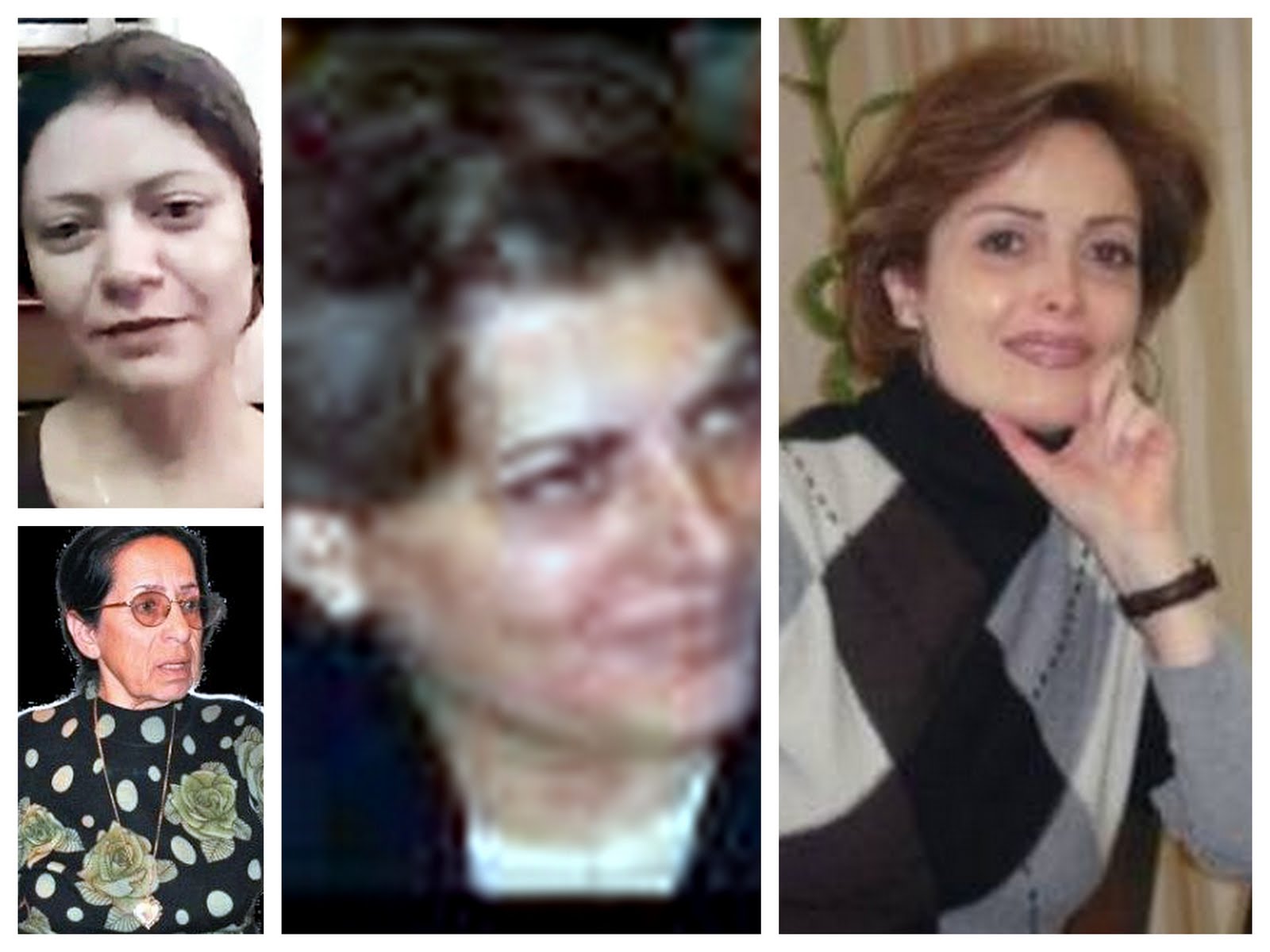
Muntaha Sultan al-Atrash (left), Razan Zaitouneh (top left), Fedaa Hourani (center) and Suhair Atassi (right)
The U.S.-sponsored drive to overhaul the Syrian opposition’s leadership is roller-coasting its way to a November 8 finale in Doha.
The drive aims to form a new opposition umbrella, called the Syrian National Initiative (SNI), to supplant the Syrian National Council (SNC).
Riad Seif, a former Syrian parliamentarian and dissident, developed the SNI blueprint.
The U.S. plan to change horses midstream were first revealed October 31 by Foreign Policy’s Josh Rogin in his daily Web column The Cable (see my post of the same day, U.S. set to revisit Syria with ‘Riad Seif plan’).
Hours later, U.S. Secretary of State Hillary Clinton said the SNC should no longer be considered the “visible leader” of the opposition movement, that many of its members have not been back to Syria in “20, 30 or 40 years” and there must be a “representation of those who are on the frontlines fighting and dying today.”
The following day (Nov. 1), the State Department said it has identified individual Syrians who “show leadership” and is “bringing them to the attention” of opposition members who will gather November 7 in Doha.
“This is primarily political leadership -- people who cannot only organize, but provide services. Because what this really is about is the day after, and the day will come when Assad falls -- and there needs to be in place structures that can provide governance and services to the people,” said Patrick Ventrell, acting deputy State Department spokesman.
The focus, the official said, is on people with political and administrative skills, not military skills. Although some of them, he said, may have fought against the government as part of the opposition.
Ventrell directly criticized the SNC, saying that “after many months, (it) has not succeeded in broadening its leadership -- not to more insiders, not ethnically and not geographically. Meanwhile, we and our Friends of the Syrian people, have encountered individuals who have already displayed leadership and want to be part of Syria's future.”
The United States is anxious to avoid looking as if it is orchestrating the Doha opposition conference. Ventrell said Ambassador Robert Ford and his team will be there "on the sidelines" of the meeting.
“We are bringing these people to the attention of the Doha participants,” he said. “We’re not choosing anyone. Only the Syrian people can do that. Helping bring attention to a broader pool of candidates for the Syrian people to consider for potential leadership.”
Twenty-four hours later, Riad Seif was in Amman for consultations on the proposed SNI with about 25 Syrian dissidents and activists. Involved in the huddle were former Premier Riad Hijab, the former head of Syria’s Muslim Brotherhood Ali Sadreddin al-Bayanouni, Kamal al-Labwani and Suhair Atassi.
SNI blueprint
Seif outlined the blueprint for the SNI in Arabic. The Carnegie think-tank promptly offered this translation of the document, “given its importance for Syria and U.S. policy”:
The current situation impresses upon us the need to form a leadership framework that will bring together all revolutionary and opposition forces. Syria is in desperate need of strong leadership that is cooperative and inclusive, a leadership that responds to the needs of the revolution and our steadfast people. Establishing such a framework will ensure that the new leadership enjoys the broad support of the Syrian people and thus has the legitimacy to be recognized as their representative.
We thus plan to form a broad, democratic, and inclusive political leadership to be called the Syrian National Initiative (SNI) and that will be based on the Cairo conference documents that the Syrian opposition agreed to in July 2012. The SNI will support the internal opposition and communicate with it and will be active on regional and international fronts.
The SNI also guarantees that there will be no political vacuum following the regime’s removal from power.
The recognition of this responsibility by all Syrian opposition factions will allow the SNI to work toward realizing the following goals:
  1. Preserving the national sovereignty and independence of Syrian decisions
  2. Preserving the nation’s geographic unity
  3. Preserving the people’s unity
  4. Emphasizing that the process of devising a political solution can only begin after Bashar al-Assad and the symbols of his regime are brought down and those responsible for the spilling of Syrian blood are brought to trial
  5. Emphasizing the importance of establishing a civil, pluralistic, and democratic Syria

The Syrian National Initiative will also work to:
  1. Establish a fund to support the Syrian people
  2. Support the Free Syrian Army
  3. Administer liberated territories
  4. Plan for the transitional period
  5. Secure international recognition

To this end, all factions of the Syrian political opposition, representatives of the Free Syrian Army, military councils, revolutionary forces, local councils, and national figures from the provinces will be invited to participate in this proposed initiative and set up the following four bodies:
  1. The Initiative Body (which will include representatives from political groups, local councils, and revolutionary forces as well as national figures)
  2. A Supreme Military Council (which will include representatives from the military councils and the brigades)
  3. A Judicial Committee
  4. A transitional government (which will be made up of technocrats)

The proposed project will be discussed in Doha on November 8 in order to arrive at the best possible framework to finalize the project.
50-member assembly
“An alternative to the regime is dearly needed,” Seif, a liberal politician who is battling cancer and was only released from prison in Syria in June, told Reuters.
“We are talking about a temporary period that begins with forming a political leadership until a national assembly that represents all Syrians meets in Damascus, once Assad falls,” The charismatic 66-year old, who has been suffering from cancer for years, said in an interview in Amman.
Unlike previous efforts that failed to come up with a unified leadership, Seif said the Doha assembly will be more inclusive, representing a myriad of religious and activists’ groupings as well as more members of Assad’s minority Alawite sect and Kurdish political leaders.
“We have 10 million Syrians who need everything from housing to security to public services, and a regime we have to take every possible measure to remove to avoid more losses,” Seif said, referring to inhabitants of areas under rebel control or where central authority had collapsed.
He proposes the formation of a new 50-member civilian group that will later choose a temporary government and coordinate with the military wing of the revolt.
He said the 50-member assembly will represent the “effective powers in the revolution” and “be convincing to the Syrian people”, adding that efforts were being made to bring the rebels under a unified military command.
Western, Turkish and Arab recognition of the new opposition structure, Seif said, will help channel anti-tank and anti-aircraft missiles to the rebels and “decide the battle”.
Seif said independent figures, such as Syrian intellectual Sadeq Jalal al-Azm, would be in the group to lend credibility. Representatives of opposition local councils that are providing services in Syria’s 14 governorates also will be on board.
Lebanon’s independent daily an-Nahar says current SNC chairman Abdelbaset Sida would be asked to name 15 members to the 50-seat assembly, but will probably haggle for a higher number.”

Wednesday, 31 October 2012

U.S. set to revisit Syria with “Riad Seif plan”

Riad Seif after his shabiha beating and behind his desk

“Syrian opposition leaders of all stripes will convene in Qatar next week to form a new leadership body to subsume the opposition Syrian National Council,” according to Josh Rogin, who covers U.S. national security and foreign policy and writes Foreign Policy’s daily Web column The Cable.
Rogin, whose article you can read in full here, writes in part:
U.S officials are “frustrated with an SNC they say has failed to attract broad support, particularly from the Alawite and Kurdish minorities. The new council is an attempt to change that dynamic. Dozens of Syrian leaders will meet in the Qatari capital, Doha, on Nov. 3 and hope to announce the new council as the legitimate representative of all the major Syrian opposition factions on Nov. 7, one day after the U.S. presidential election.
“The Obama administration sees the new council as a potential interim government that could negotiate with both the international community and - down the line - perhaps also the Syrian regime. The SNC will have a minority stake in the new body, but some opposition leaders are still skeptical that the effort will succeed.
“The Qatar meeting will include dozens of opposition leaders from inside Syria, including from the provincial revolutionary councils, the local ‘coordination committees’ of activists, and select people from the newly established local administrative councils.
"We call it a proto-parliament. One could also think of it as a continental congress," a senior administration official told The Cable.
“U.S. officials and opposition leaders are calling the initiative the ‘Riad Seif plan,’ named after the former Syrian parliamentarian and dissident who was imprisoned after he signed the Damascus Declaration on respect for Syrians' human rights in 2005. He was released in 2011, beaten up by a Shabiha gang in October 2011, and finally allowed to leave Syria in June 2012.
“Seif is central to the formation of the new council and is seen as a figure with broad credibility with both the internal and external Syrian opposition.
“‘We have to get [the internal opposition] to bless the new political leadership structure they're setting up and not only do we have to get them to bless the structure, but they have to get the names on it," the official said, noting that the exact structure of the council will be determined in Qatar, not before.
“‘We need to be clear: This is what the Americans support, and if you want to work with us you are going to work with this plan and you're going to do this now,’ the official said. ‘We aren't going to waste time anymore. The situation is worsening. We need to do this now.’
“…The U.S. government will be represented at the Nov. 7 Qatar meeting by Ambassador to Syria Robert Ford, who has been dealing with various opposition groups and weighing in on the composition of the new council, a senior administration official said…”